
Plumber in Burnett Heads, QLD
Plumbing, septic and drainage work in Burnett Heads, from the port to the cane
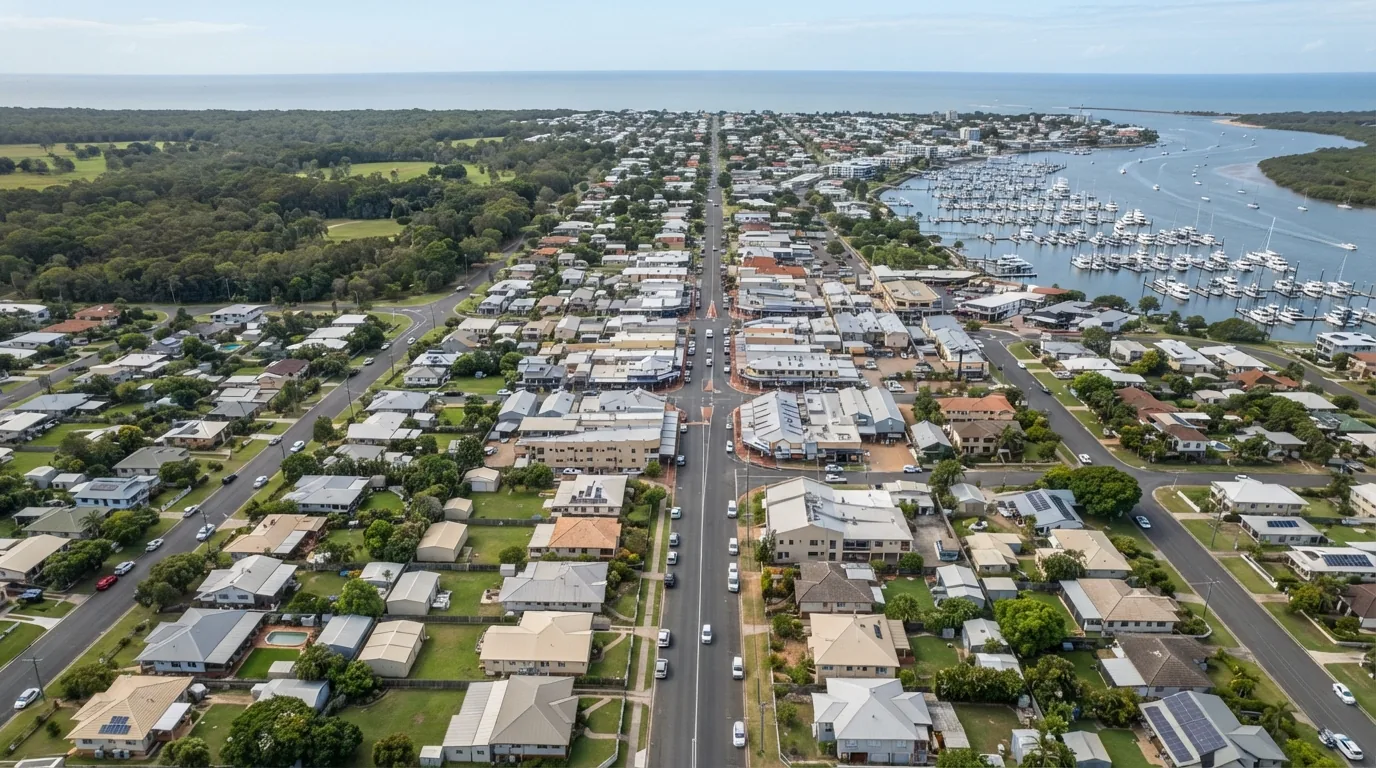
Burnett Heads sits on the southern side of the Burnett River mouth. The river runs along the western and northern edges, and the Coral Sea along most of the east. Around 2,900 people lived here at the 2021 count. Houses cluster near the coast, the Port of Bundaberg takes up the industrial land, and the rest is sugarcane farming, with cane tramways carrying the crop to the Millaquin mill. The township goes back to land sales in 1883.
The ground matters here. A report from 1917 described the area nearby as a mosquito infested swamp, which points to low, wet ground close to the river and the coast. Storm surge is also raised as a concern for Burnett Heads. Low wet ground can mean drains with little fall, soil that holds water around a pipe, and pits that stay full after rain. We think about where the water will go before we plan a repair.
Burnett Heads is only partly on council sewer. Council built a pump station in Milton Street in December 2024 to serve the Ocean Breeze development and the RV Lifestyle Village, and said it would reduce the use of onsite sewage treatment systems. That suggests older parts of town may still use septic systems. We do not know which streets are sewered, so it is worth checking first. If you are not sure what your property is on, tell us what you can see.
What we do here most
What low ground, septic tanks and the port keep needing
Burnett Heads mixes houses, cane land and port industry on low ground. The four jobs below follow that mix.
Septic systems
Slow drains from an onsite sewage system
If the house is not on council sewer, waste goes to a tank and then to a trench or other disposal area on the block. Slow drains, gurgling and wet or smelly ground over the trench can mean the tank is full or the pipes into it are blocked. We camera and clear the pipes between the house and the tank, and tell you what we find. If the tank itself needs pumping or repair, we say so.
Pumping systems
Keeping a pump working on low wet ground
Where land is low and wet, some properties rely on a pump to move waste or stormwater to the main or away from the building. A pump that runs all the time, switches on and off quickly or trips the power is telling you something. We check the float, the pump, the valve and the pipework, and clear whatever is jamming it. We can also set up regular checks if you want them.
Commercial plumbing
Drainage and plumbing for a port-side business
Part of Burnett Heads is industrial land around the Port of Bundaberg, and drains there are bigger and busier than in a house. Floor wastes, workshop drains and stormwater pits take heavy loads of dirt and oil. We clear blocked lines with the high pressure jetter, camera them, and locate the pipes when plans are missing. Tell us what the site is used for so we bring the right gear.
Stormwater
Stormwater pits that fill on low wet ground
On low ground near the river and the sea, stormwater has little fall and nowhere to go when the ground is already wet. Storm surge and heavy rain can fill pits and pipes at the same time. We jet the lines, camera the pipes to find sagging sections, and look at whether the pit is deep enough. Sometimes the fix is a length of pipe that needs re-laying with more fall.
If it is urgent
If a pipe lets go or waste comes up in Burnett Heads
- 1Turn the water off at the meter or the isolating valve. If your property has a pump, switch it off at its own switch so it does not keep running on a broken pipe.
- 2If wastewater is coming up near a septic tank or trench, keep people and pets away from it and stop using water inside until it settles. Keep the power off if water has reached any power point or the pump switchboard.
- 3Tell us whether the property is on council sewer or a septic tank, if you know, and whether the ground around it is already wet or flooded. Say where the water is, and whether it is near the river or the coast.
Common questions
Frequently Asked Questions
Which areas do you cover?
Bundaberg and the surrounding Wide Bay region. There are twenty suburbs and towns on the service areas page, from Moore Park Beach in the north to Woodgate in the south and Gin Gin in the west. If yours is not on the list it is still worth asking, because the list is where there are pages, not a boundary.
Do you work on homes and businesses?
Both. The work covers houses and units, and commercial and industrial sites. Ask about the specific place and what the job involves, and you will get a straight answer.
Do you do roofing?
No, roofing is not something we do. This site covers plumbing, drainage, pipe relining, gas fitting and hot water systems. If you need something that is not listed, such as gutters, ask when you call.
How do I book or ask a question?
Call 0485 033 237 on Monday to Friday between 7am and 4pm, email admin@nuflowwidebay.com.au, or send the form on the contact page. Say what the problem is and where you are, and send a photo if you can.
What is pipe relining?
Relining puts a new pipe inside the old one. A liner soaked in resin is pulled or inflated into the damaged pipe and left to harden, which leaves a smooth new surface inside the old pipe without trenching across the yard. It suits cracked, root-damaged and leaking pipes.
Can every damaged pipe be relined?
No. A camera inspection shows the condition of the pipe first. Relining suits many cracks, joints and root problems. A pipe that has collapsed or fallen apart may need a section dug up and replaced instead, and we tell you which one applies.
What does a drain camera inspection show?
A small camera on a flexible cable goes down the drain and the picture shows on a screen. It shows cracks, roots, joints that have moved, build-up and blockages, so the repair is chosen from what is actually in the pipe and not from a guess.
Why does my drain keep blocking?
A drain that blocks again and again usually has a cause, such as tree roots in a joint, grease building up, a pipe that has dropped or cracked, or something lodged in the line. Clearing it fixes today's problem. A camera shows the reason and what would stop it coming back.
What is hydro jetting and how is it different from rodding?
Hydro jetting sends high pressure water through a nozzle to scour grease, silt and roots off the pipe wall. Rodding pushes a cutting head through the blockage. Which one suits depends on what is in the drain and what the pipe is made of.
Which types of hot water system do you work on?
Gas, electric and heat pump systems, for repairs, installation and replacement. If you are not sure which type you have, send a photo of the unit and the rating plate on its side.
Should I repair or replace my hot water system?
It depends on the fault. A faulty valve, thermostat or element can often be repaired. A tank that is leaking from its body generally cannot be, and the unit needs replacing. We look at it and tell you which applies.
What gas work do you do?
Gas fitting and gas appliance installation, including connecting appliances, running gas lines and finding leaks, as well as gas hot water systems. If you smell gas, leave the building, keep away from switches and flames, and ring your gas supplier's emergency line or 000.
Everything we do here
Services in Burnett Heads, QLD
Septic questions, pumps and port-side drains all come up in Burnett Heads, and the services below cover them.
Also nearby
We work in these suburbs and towns too
Local, and on the phone
Send us a photo from your Burnett Heads property
Send a photo of the problem and tell us your street. If you know whether you are on council sewer or a septic tank, add that. It helps us plan the job.
0485 033 237Monday to Friday, 7am to 4pm
Not urgent? Send us the job instead